The Best CDP Platforms for Ecommerce Brands (And Why You Probably Need One Sooner Than You Think)
Published on April 24, 2026
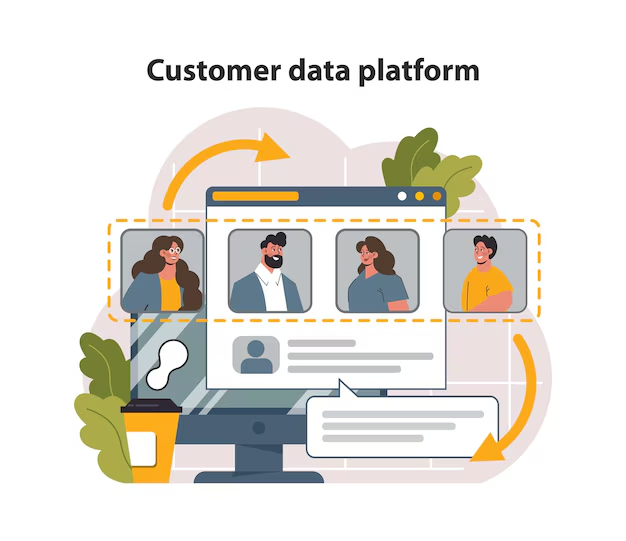
Let’s start with a slightly uncomfortable question.
Where does your customer data actually live?
If your answer is something like “a bit in Shopify, some in Klaviyo, a spreadsheet from 2022, and possibly a Slack message someone swore they pinned,” you’re in good company. Most brands are sitting on valuable customer data, but it’s scattered across tools like a digital junk drawer that nobody wants to organize.
And that’s exactly where a CDP comes in.
A Customer Data Platform, or CDP, takes all that chaos and turns it into something useful. Instead of guessing who your customers are, you actually know. And in a world where first-party data is quickly becoming your biggest competitive advantage, that is kind of a big deal.
At its core, a CDP collects, organizes, and activates your customer data.
It pulls information from your website, email platform, CRM, ad accounts, and other tools, then stitches everything together into one unified customer profile. That means you can finally see what someone browsed, what they bought, what emails they opened, and how they interact with your brand across channels.
If you are thinking “I’m pretty sure we already have that,” there is a decent chance you do not. Or at least not in a way that actually works.
Most tools operate in silos. Your email platform knows email behavior. Your ad platform knows clicks. Your website knows browsing activity. None of them are talking to each other, which is why your marketing sometimes feels like it has multiple personalities.
This becomes especially powerful when paired with a strong first-party data strategy for ecommerce brands, because collecting data is easy. Making it useful is where the real magic happens.

CDPs are not new, but they are having a moment.
Privacy updates, weaker tracking signals, and smarter ad algorithms have changed the game. Platforms like Meta and Google now rely more heavily on the data you give them. If your data is clean and structured, performance improves. If your data is messy, your campaigns start behaving like they had too much coffee and not enough direction.
That means messy data is no longer just annoying.
It is expensive.
Industry research on first-party data strategies for digital advertising highlights how brands with strong data foundations are seeing better targeting and more stable performance.
Translation: the brands that know their customers are winning.
The brands that do not are guessing and hoping for the best.
Not all CDPs are created equal. Some are built for massive enterprises with entire data teams. Others are designed for ecommerce brands that want results without scheduling six meetings just to connect one integration.
Here are some of the best CDP platforms for ecommerce brands in 2025.
Segment is one of the most well-known CDPs and for good reason. It connects with just about everything and acts as a central hub for your data.
If your current setup feels like ten tools duct-taped together, Segment helps make it feel like one actual system. It is powerful, flexible, and occasionally makes you feel like you have your life together.
Klaviyo expanding into CDP territory makes a lot of sense. Many ecommerce brands already live inside Klaviyo, so adding data capabilities feels less like onboarding a new platform and more like upgrading your current one.
It is one of the more accessible CDP tools for ecommerce marketing teams, especially if your goal is to improve retention, segmentation, and email performance without needing a data engineering degree.
Bloomreach is all about personalization. It uses customer data to improve product recommendations, search results, and on-site experiences.
Think of it as the platform that makes your website feel smarter. Or at least smarter than it was yesterday.
Amperity is more enterprise-focused, but extremely strong when it comes to cleaning and unifying messy data.
If your customer data currently looks like it went through a blender, Amperity can help make sense of it.
mParticle focuses on real-time data and activation across multiple platforms. It is powerful, flexible, and particularly useful for brands with more complex data needs.
It is also one of those tools where you realize halfway through implementation that data is, in fact, a whole personality trait.
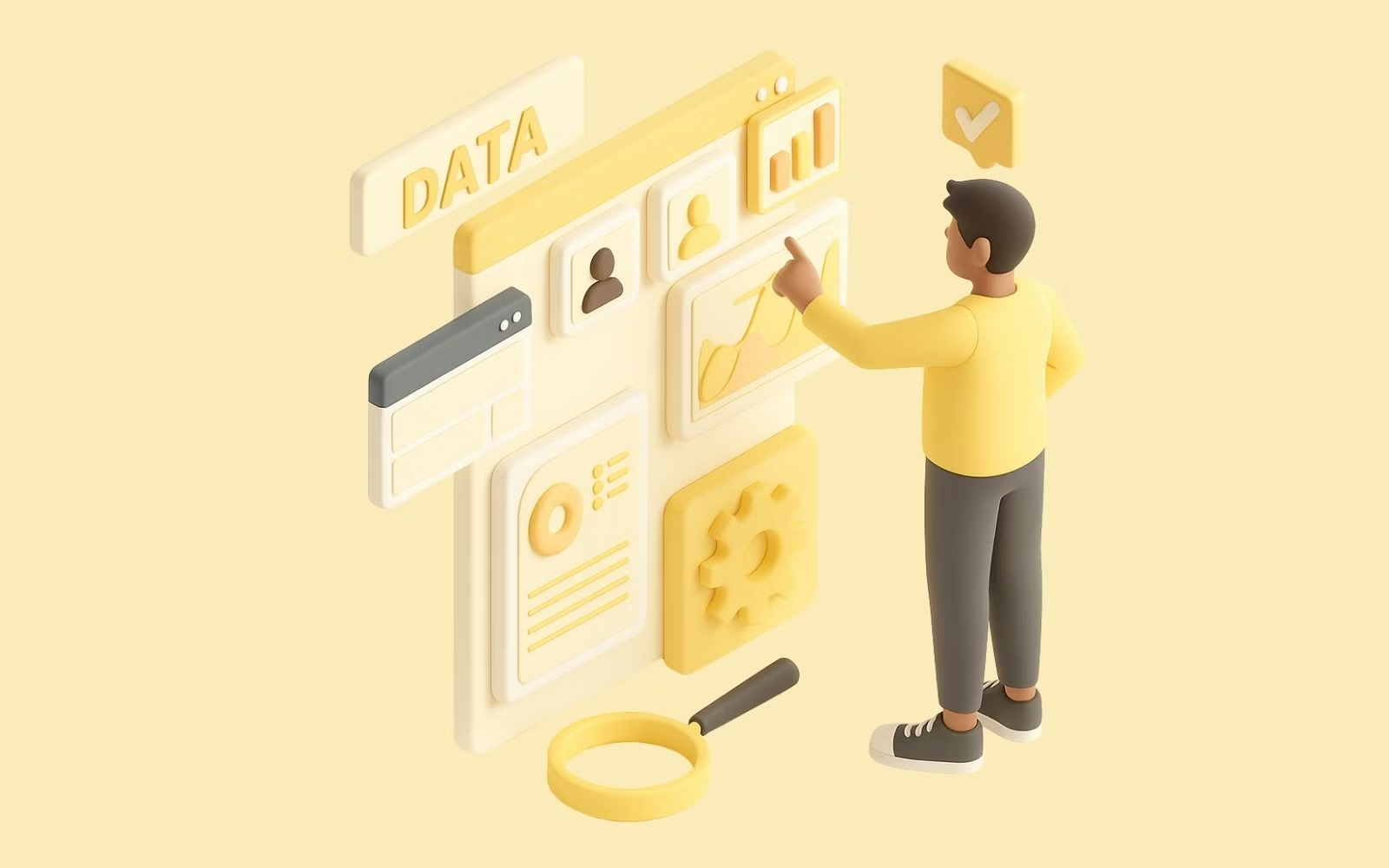
Choosing a CDP is not about picking the one with the most features. It is about picking the one that solves your problem.
If your goal is better email and retention, Klaviyo might be enough.
If you need a central hub to connect multiple tools, Segment is a strong choice.
If your data is chaotic and needs serious cleanup, Amperity might be your new best friend.
The biggest mistake brands make is choosing a tool because it sounds impressive instead of choosing one because it solves something real.
A CDP should make your life easier.
Not give you another dashboard to ignore.
CDPs are not just for organizing data. They directly impact how your ads perform.
When you feed platforms like Meta and Google clean, structured customer data, their algorithms get better at finding the right people. This ties directly into how modern ad systems work, especially in automated campaigns like Meta Advantage+ and AI-driven ad delivery systems.
Better data leads to better targeting.
Better targeting leads to better performance.
And better performance usually means fewer “why is our CPA suddenly double?” conversations.
A CDP helps ecommerce brands clean up their customer data, unify it across platforms, and actually use it to improve marketing performance. As third-party tracking becomes less reliable, first-party data becomes more valuable, and CDPs make that data usable.

For years, marketers relied on platforms to tell them who their customers were.
Now the smartest brands are building that understanding themselves.
A CDP is not just another tool. It is quickly becoming the foundation of modern ecommerce marketing.
The brands that invest in their data today will move faster, spend smarter, and scale more efficiently.
Everyone else will still be opening five tabs, three dashboards, and one very confusing spreadsheet trying to figure out what is going on.
And honestly, we have all been there.
The TL;DR "Best" is a fit question, not a fame question. You have four ways...
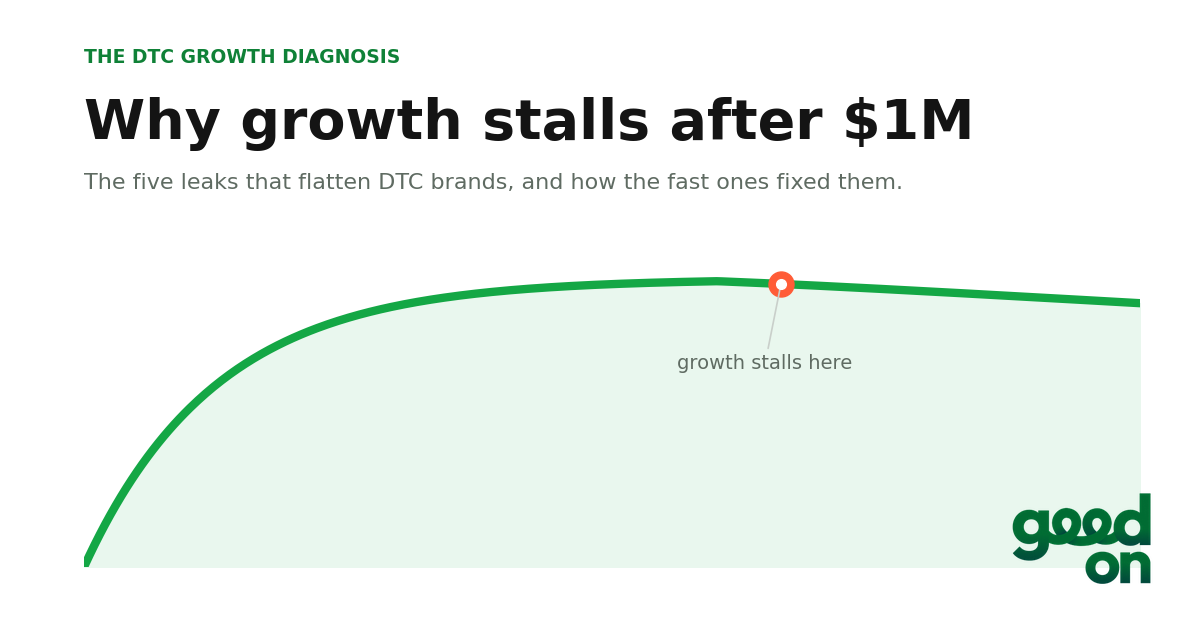
The Operator’s Read The five leaks that stall DTC brands after $1M Written by Shriya...

Your Meta ads stopped scaling. The platform is not broken. Here are the three real...