The Operator’s Read
How to choose a DTC growth agency in the Bay Area
If you own growth at a DTC brand doing between $1M and $5M, you know the moment this guide is for. Paid has plateaued, leadership wants the next phase, and you’re weighing whether to bring in outside help, and if so, who. You already know marketing. What you need is senior firepower and a system, not a lecture.
So here’s the honest version, from someone who runs one of these agencies here in the Bay Area. Almost every “best DTC agencies in San Francisco” list you’ll find is a directory where the ranking is pay-to-play. The agency at the top isn’t the best. It’s the one that paid. The best agency for you is not a name you can look up. It’s a fit you have to diagnose against your stage, your team, and your bottleneck. This guide is how to do that in an afternoon.
Why “best” is the wrong question
There is no single best DTC agency, in the Bay Area or anywhere. There’s the best partner for your stage, your team, and your bottleneck. A brand where you’re a team of one needs a partner who brings hands as well as strategy. A brand with four marketers in-house needs a partner who fills specific gaps (advanced performance, attribution, creative volume) without stepping on the people you already have. Same revenue band, completely different “best.”
The reason the directories mislead you is that they rank on spend and reviews, not fit. A famous agency with a 200-person roster can still put a junior on your account and quietly bill a retainer while they learn. A solo freelancer can be brilliant and completely swamped. Fame tells you almost nothing about whether they’ll move your number.
The 4 ways to add growth capacity (and the trap in each)
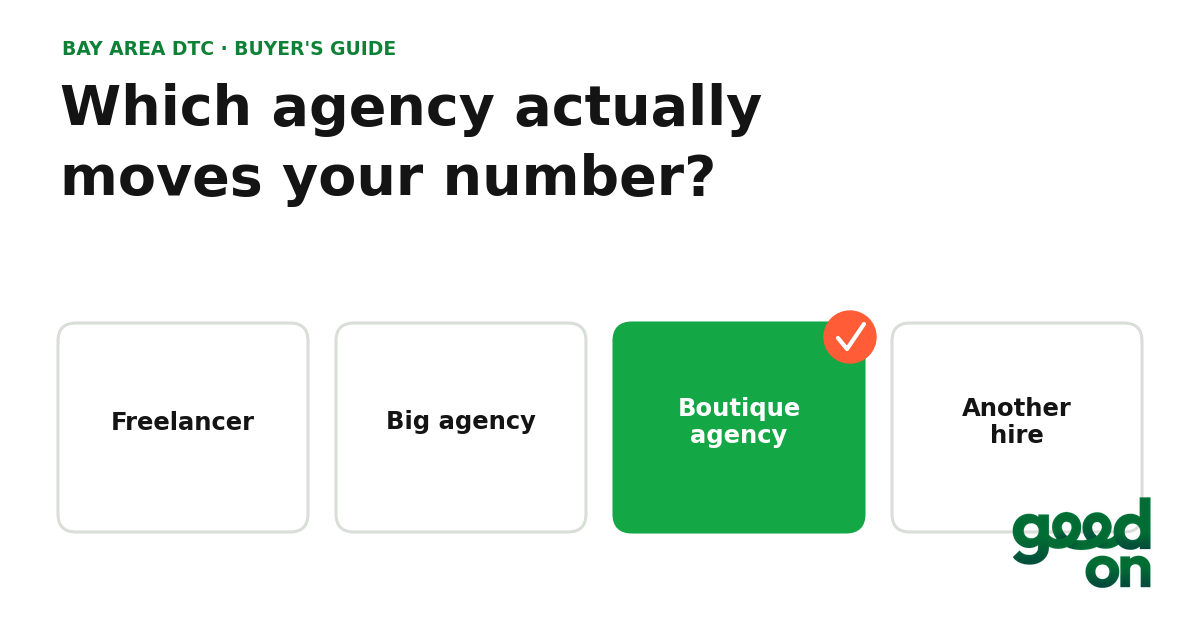
Before you shortlist anyone, get clear on which kind of help you’re adding. Each has a real trap. This is the table to save.
| Option | Typical cost | Best when | The trap |
|---|---|---|---|
| Freelancer | $1K to $4K/mo or hourly | You need one specific skill, one channel | No system, no coverage. Great at one thing, no one owns the blended number. Bus-factor of one. |
| Big / full-service agency | $8K to $25K+/mo | $10M+ with complex, multi-market needs | You’re a small account. Senior in the pitch, junior on the work. Budget drains on retainer while results lag. |
| Boutique agency (like Good On) | ~$3K to $8K/mo | $1M to $5M, plateaued, want a senior partner | You have to vet it’s a genuinely senior team that plugs into your team, not a solo freelancer calling itself an agency. |
| Another in-house hire | $90K to $160K+/yr loaded | Steady, predictable work you can keep busy | One more hire still can’t cover paid, creative, CRO, and attribution. Slow to hire, and you’re back to bandwidth limits fast. |
Save this. Most $1M to $5M growth leaders over-shop the big agencies and under-consider the boutique agency, which is usually the best value at this stage: a small senior team that owns the hard parts and plugs into whatever team you already have, without big-agency overhead or the bus-factor of one freelancer.
What actually moves your number at $1M to $5M
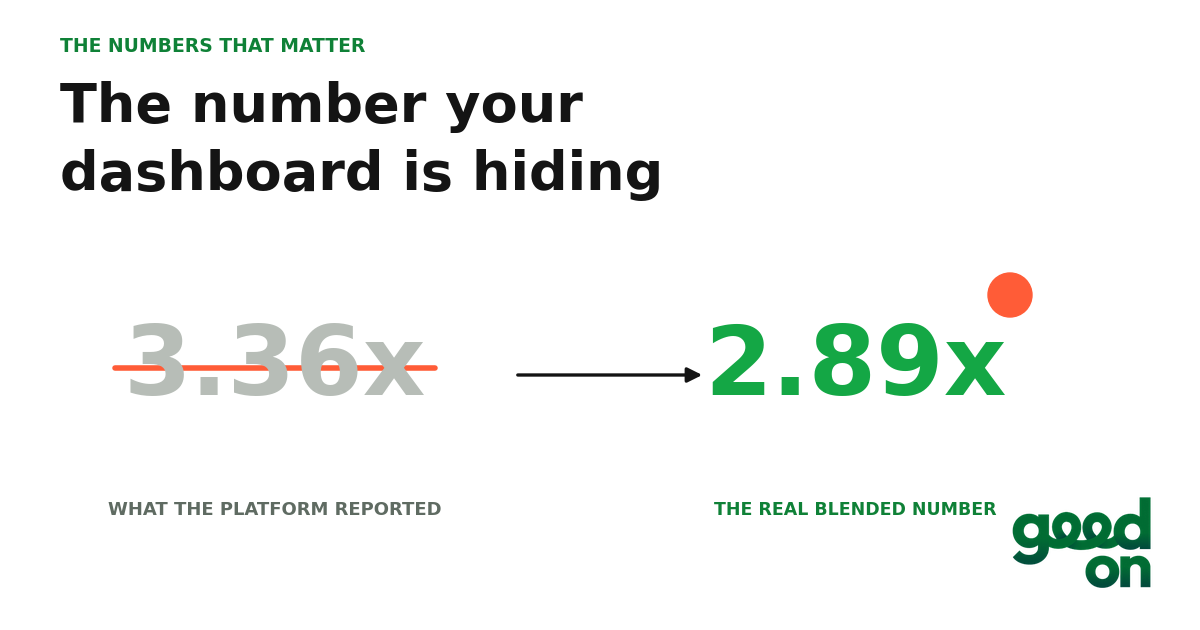
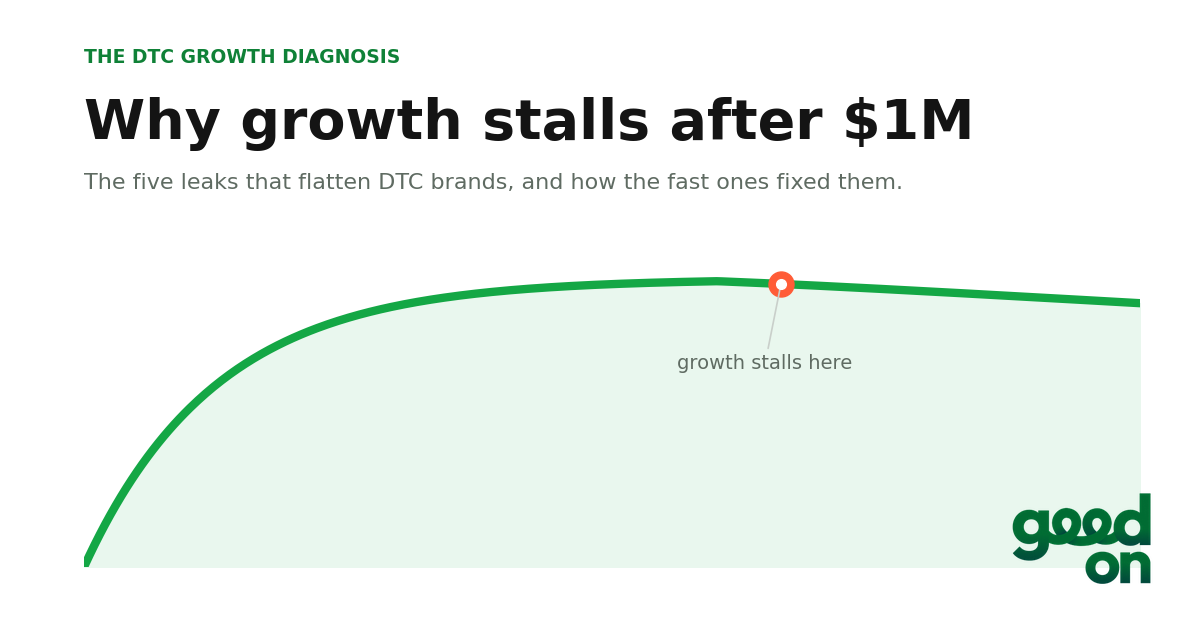
You’re measured on revenue growth, CAC, MER, ROAS, LTV, and conversion rate, so judge any partner on those, not on activity. Here’s what actually breaks a plateau between $1M and $5M, and what to make sure a partner owns: honest measurement (blended MER and contribution margin after ad spend, not one campaign’s ROAS), real cross-platform attribution, a creative testing pipeline shipping fresh concepts every week, retention flows earning in the background, and a repeatable system instead of month-to-month guessing. If you want the full diagnostic, we wrote the five reasons brands stall in why your DTC brand stalled after $1M.
Get the operator’s read, monthly
The Good Word: what I’m seeing across $2M+ in DTC ad spend, in plain English, for growth leaders. No fluff, no pitch.
Subscribe to The Good WordWill an agency step on my team?
This is the fear that keeps most growth leaders from pulling the trigger, and it’s a fair one. You’ve built a team. The last thing you need is an outside vendor duplicating what your people already do, black-boxing the work, or making you look redundant to your CEO.
A good partner does the opposite. It plugs into your team and owns the parts that are hard to staff for: advanced performance strategy, a creative testing system, cross-channel attribution, and scaling paid profitably. It reports transparently, in the numbers you report upward, so you look sharper to leadership, not less necessary. When you shortlist, screen hard for this: the right partner amplifies your team, the wrong one competes with it.
8 questions to ask before you sign
Ask these on the first call. The answers sort strategic partners from order-takers fast.
- Who actually runs my account day to day, and how senior are they? You want a name and a real answer, not “our team.”
- What number are you accountable for? Blended MER and contribution margin, or just platform ROAS? Only one of those is the truth.
- How do you measure across channels? Real cross-platform attribution, or Meta’s self-reported number taken at face value?
- How will you work with my existing team? You want a clear answer on who owns what, so they complement your people instead of duplicating them.
- How many new creatives do you ship a week, and who makes them? Creative is the lever that stops working first.
- What do you do about retention? If the answer is “that’s not us,” half your growth is off the table.
- What does reporting look like, and how often? You want the blended number weekly, in plain English you can take to your CEO.
- Walk me through a stalled account you turned around. Wins are easy. Recoveries show skill.
5 red flags
- They lead with ROAS on one campaign. That number lies as you scale. Blended is the truth.
- They can’t name who works on your account. You’re getting the junior.
- No talk of retention, attribution, or creative volume. They’re a media buyer, not a growth partner.
- Vague about how they work with your team. That’s how you end up with duplication and turf wars.
- Long lock-in before any results. Confidence doesn’t need a 12-month cage.
Score your growth before you brief anyone
Grab the free DTC Growth Audit Checklist, the same 12-point audit we run on client accounts before we touch a dollar of spend. It’ll tell you exactly which gaps a partner needs to fill, in five minutes.
Get the free checklistHow to compare agencies (without the pay-to-play lists)
Directories like Clutch, Semrush’s agency list, and DesignRush are fine as a starting rolodex, just remember placement is often paid, so treat the order as advertising, not ranking. Use them to build a shortlist, then do the real work: read the actual case studies (not the logos), check Google reviews for specifics, and get on a call and ask the eight questions. A 30-minute call tells you more than any list.
Where Good On fits
I’ll be straight about who we are, so you can decide if we’re your fit. Good On is a boutique DTC performance-marketing agency based in the Bay Area: a small, senior team built for growth leaders at brands in the $250K to $5M range. Boutique matters here. The senior operators who pitch you are the ones who run your account, and we plug into whatever team you have, from a team of one to a full in-house crew, and own the hard parts: paid media, creative testing, CRO, and retention. We’re accountable for your blended number and we report in the metrics you take upstairs, so you look sharper to leadership, not less necessary.
What that looks like in the accounts we run: we scaled Orion from a 1.3x to a 6.5x ROAS, with peaks around 12x. We cut cost per sales-qualified lead for TAFC from $135 to $73.50. We drove a 2800% ROI for Caring Transitions. Real results from a senior team that integrates with yours. If that’s the kind of partner you’re weighing, the fastest way to find out if we can help is a free 15-minute audit you can take back to your team.
Get a second read on your account
Book a free 15-minute audit. We’ll review your account, name your top 3 budget leaks, and tell you honestly whether you need us, a freelancer, or another in-house hire. A straight strategic read you can take to your CEO. No pitch.
Book your free auditFrequently asked questions
Will an agency replace or duplicate my in-house team?
A good one won’t. The right partner plugs into your team and owns the parts that are hard to staff for (advanced performance, creative testing systems, attribution, scaling), reports transparently in your KPIs, and makes you look sharper to leadership. If an agency is vague about who owns what, that’s the red flag for duplication and turf wars.
Is a local Bay Area DTC agency better than a remote one?
Local helps with timezone, faster creative approvals, and in-person trust, which is real value. But it doesn’t beat capability. A great remote partner will out-perform a mediocre agency down the street. Use location as a tiebreaker, not the deciding factor.
How much should a DTC marketing agency cost?
For a $1M to $5M brand, a boutique agency typically runs about $3K to $8K a month, freelancers $1K to $4K, and big full-service agencies $8K to $25K or more. What matters more than the retainer is the contribution margin after ad spend it produces. Judge the partner on the blended number, not the invoice.
How do I vet a DTC agency?
Ask who runs your account and how senior they are, what number they’re accountable for (blended MER, not one campaign’s ROAS), how they measure across channels, and how they’ll work alongside your existing team. Then ask them to walk you through a stalled account they turned around. A capable partner answers all of these clearly and fast.
What size brands does Good On work with?
Our sweet spot is DTC brands doing $250K to $5M, whether you have a full marketing team or you’re a team of one. We integrate with whatever you’ve got. The fastest way to find out if we’re a fit is a free 15-minute audit.